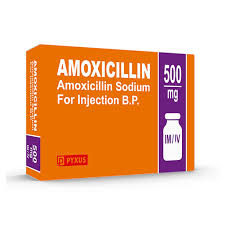
Amoxicillin injection is a broad-spectrum penicillin antibiotic used predominantly in hospital settings to treat severe or urgent bacterial infections. It is typically administered when a patient cannot take medications orally. The medication is presented as a white powder vial containing amoxicillin sodium, which must be reconstituted with a sterile liquid before use
🩺 Primary Medical Uses
Amoxicillin injection is reserved for serious infections caused by susceptible bacteria, including:
Severe Respiratory Tract Infections:
Severe pneumonia, acute bronchitis flare-ups, and advanced sinus infections.
Urgent Ear, Nose, and Throat Infections:
Severe mastoiditis or epiglottitis.
Systemic and Organ Infections:
Bacterial meningitis, blood infections (bacteremia/septicaemia), and endocarditis.Abdominal and Urinary Infections:
Severe kidney infections (pyelonephritis) and complex cystitis.Skin and
Joint Infections: Deep tissue cellulitis, severe dental abscesses, and prosthetic joint infections.
💉 Administration Methods
Amoxicillin injection is intended for professional use only and must never be self-administered. A healthcare provider will deliver it through one of the following methods:
Intravenous (IV) Infusion: Slowly dripped into a vein over 20 to 30 minutes.
Intravenous (IV) Bolus: Injected directly into a vein over a period of 3 to 4 minutes.
Intramuscular (IM) Injection: Administered directly into a large muscle group.
⚠️ Crucial Safety Considerations
Penicillin Allergy: This drug must never be given to individuals with a history of severe hypersensitivity reactions to penicillins or related beta-lactam antibiotics like cephalosporins. Doing so can cause life-threatening anaphylaxis
Organ Function:
Patients with renal impairment (kidney issues) typically require specialized dose reductions. Prolonged therapy may also warrant routine liver function monitoring.
Combination Formulations: It is frequently paired with a beta-lactamase inhibitor (such as clavulanic acid in co-amoxiclav) to protect the amoxicillin from being destroyed by antibiotic-resistant bacteria.Side Effects: Common reactions include diarrhea, nausea, vomiting, and skin rashes.(Note: There are also highly distinct veterinary amoxicillin suspensions manufactured strictly for livestock and pets; human formulations should never be swapped with animal medicines).
.jpg)


.jpg)